


How to Use Custom 4th of July Shirts for 2x Sales This July: Step-by-Step Printing Guide
July is the absolute gold rush for custom apparel. If you run a beginner print shop, sling designs on Etsy, or you are a traditional screen printer tired of burning screens for multi-color jobs, this is your sandbox. The secret to doubling your revenue this season boils down to speed, color vibrancy, and zero inventory waste. Using premium Custom 4th of July Shirts with DTF transfers allow you to print complex, high-visibility patriotic apparel on demand without locking up your cash flow in unsold stock.
Ready to scale your production? Partner with Cheetah DTF for commercial-grade transfers that never crack, peel, or fade under the summer sun.
What Are Custom 4th of July Shirts
Custom 4th of July shirts are personalized, theme-specific garments designed for Independence Day celebrations, family reunions, local parades, and community events. Unlike generic mass-produced holiday apparel, these garments incorporate localized graphics, family names, corporate branding, or trending political satire mixed with traditional American imagery.
From a technical manufacturing standpoint, these shirts require crisp white under-basing to ensure bright reds and deep blues pop against dark cotton or polyester fabrics. The modern market demands soft-hand prints that survive heavy sweat, backyard smoke, and multiple washing machine cycles without losing color density.
Custom vs. Ready to Press 4th of July DTF Transfer for T-Shirts
Choosing between custom builds and stock designs determines your profit margins and operational turnaround times. Let us break down the economics and production differences.
|
Feature |
Custom 4th of July DTF Transfers |
Ready to Press Stock Transfers |
|
Design Flexibility |
Unlimited; supports local business logos, names, and custom text |
Fixed; limited to generic slogans and basic flag graphics |
|
Profit Potential |
High; custom personalization commands a 40% to 60% price premium |
Moderate; high competition on identical stock designs drops prices |
|
Inventory Risk |
Zero; you print exactly what the customer orders on demand |
Low to medium; leftover stock cannot be sold after July 5th |
|
Production Speed |
Requires file prep and gang sheet layout time |
Immediate application; ships faster to the end consumer |
Stock graphics work well for roadside stands needing generic 4th of July t shirt designs, but customization is where independent print shops beat big-box retailers. Offering custom options protects your business from competing in a race to the bottom on price.
The Economics of Doubling Your July Print Revenue
Let us look at the hard numbers. A standard retail blank t-shirt costs between $2.50 and $4.00 (verify current pricing on SanMar or S&S Activewear). A high-quality DTF graphic costs roughly $2.00 to $3.50 depending on the total area of your gang sheet. Your total raw material investment sits right around $5.50.
During the summer holiday rush, personalized independence day shirts retail easily for $25.00 to $32.00 on platforms like Etsy.fIf your shop averages 15 shirt sales a day normally, hitting a target of 30 daily patriotic themed shirts during the pre-holiday rush nets an extra $8,775 in gross profit over a 30-day cycle. You do not need massive machinery to hit these numbers; you just need an efficient heat press and a reliable transfer supplier.
Stop wasting money on cheap film that ruins your garments. Source your custom patriotic shirts prints from Cheetah DTF to secure industry-leading durability and vibrant colors that keep clients coming back.
Step-by-Step Printing Guide for Independence Day Garments
Achieving retail-ready prints requires precise execution of temperature, pressure, and timing. Follow this production blueprint to avoid ruined blanks and peeling designs.
1. Preparing the Artwork for High Vibrancy
Ensure all files are formatted to 300 DPI in CMYK color mode. True American navy blue and deep crimson red can shift toward muddy brown or purple tones if your color profiles are incorrect. Export your designs with a transparent background as a compressed PNG or TIFF file. Avoid transparency gradients under 10% opacity, as the white ink backup layer requires a solid edge to adhere correctly.
2. Setting Up the Heat Press Parameters
Different garment fabrics require distinct heat profiles to avoid scorching. Use a calibrated digital pyrometer to verify your heat platen has uniform temperatures across the surface.
- 100% Cotton Blanks: Press at 300°F to 320°F (149°C to 160°C) for 12 to 15 seconds with medium-to-high pressure (approx. 45 to 60 PSI).
- Polyester & Blends: Lower the heat to 275°F to 285°F (135°C to 140°C) for 10 to 12 seconds using light-to-medium pressure to prevent dye migration and fabric sheen marks.
3. Pre-Pressing the Garment
Moisture is the primary enemy of a successful DTF bond. Press your blank shirt for 5 seconds without the film. This flattens out any seams, removes factory wrinkles, and drives out hidden ambient humidity locked inside the fabric fibers.
4. Aligning and Pressing the Film
Position your 4th of July DTF transfers graphic onto the center of the chest, maintaining a distance of three fingers down from the collar line. Lock down your heat press for the designated time cycle. Ensure the shirt remains completely flat during this process.
5. Cooling and Peeling
Most premium films require a cold peel process. Remove the garment from the press platen and lay it on a flat metal table to dissipate heat quickly. Wait until the film feels completely cold to the touch before pulling it off in one smooth, low-profile motion from a corner.
6. The Post-Press Finish
Place the peeled garment back onto the press. Cover the graphic with a sheet of high-grade parchment paper or a silicone mat. Press for a final 5 seconds. This secondary press embeds the cured ink deep into the fabric weave, creating a retail-grade finish and maximizing wash durability.
Trending 4th of July Shirt Ideas for 2026
To hit that 2x sales goal, you need to offer concepts that move beyond the basic flag graphic. Here are three high-performing creative directions driving customer orders right now.
Retro Americana Aesthetic
Think distressed textures, vintage cream backgrounds instead of stark white, and old-school typography. Combining eagle graphics with 1970s style script lettering captures the nostalgic vibe currently dominating social media marketplaces.
Distressed Flag Layouts
Solid blocks of ink can feel heavy on lightweight summer shirts. Utilizing distressed, weathered, or grunge flag elements reduces ink weight, increases garment breathability, and offers a rugged style preferred by blue-collar brands and outdoor event planners.
Family Reunion Matchups
Create customizable bundles where families can insert their last names into patriotic designs (e.g., "The Smith Family Freedom Fest 2026"). Offering multi-shirt package discounts drives up your average order value significantly.
Cheetah DTF Production Solutions
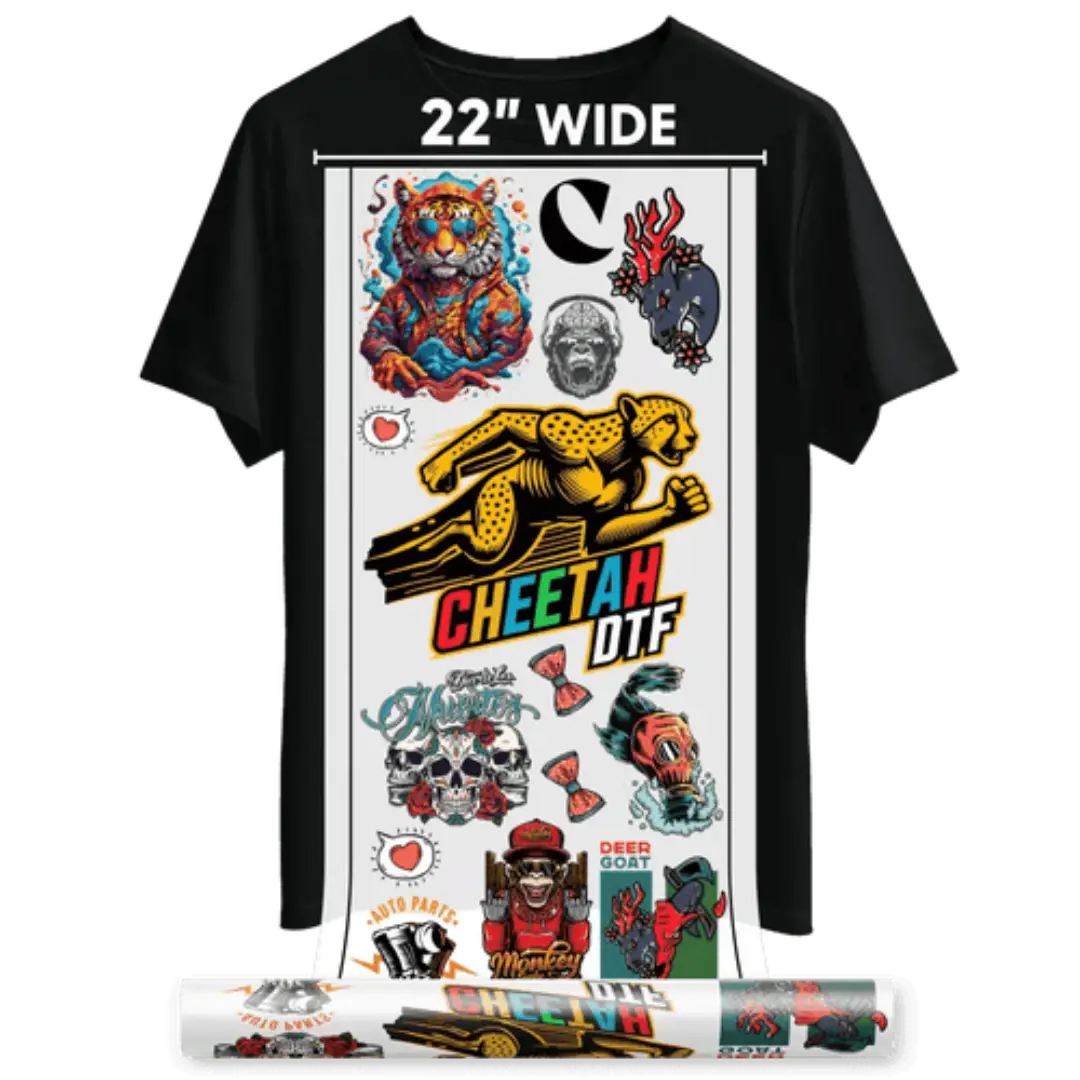
Our advanced manufacturing workflow minimizes your production hiccups. When you order your patriotic DTF transfers sheets from Cheetah DTF, you gain access to rapid production timelines and flawless powder application that guarantees effortless peeling.
Technical Troubleshooting: Avoiding Common Summer Printing Pitfalls
Summer printing introduces ambient challenges that can disrupt your shop workflow. Address these issues proactively to protect your margins.
Humidity and Ink Clumping
High shop humidity makes DTF powder clump up on the film, causing speckled white spots around your artwork edges. Maintain your workspace between 40% and 50% relative humidity. Store unused film rolls inside sealed plastic bins with silica gel packets.
Fabric Scorching
Lightweight tri-blends and neon summer colors scorch easily under high heat. If you see shiny ring imprints around your design zone, drop your press temperature by 15 degrees and extend the press duration by 3 seconds to compensate.
Poor Wash Fastness
If designs lift off after a single wash, the internal adhesive powder did not melt completely during production or your press pressure was insufficient. Always perform a test wash on a sample garment before running a large client batch.
Making More Money with Custom 4th of July Shirts
The 4th of July season is one of the most profitable windows for custom apparel businesses, but success depends on execution, not just demand. Shops that win during this period are the ones that streamline production, reduce inventory risk, and consistently deliver bold, durable designs at speed.
By combining well-prepared artwork, properly calibrated heat press settings, and reliable DTF transfer workflows, you can turn short holiday demand into a significant revenue spike instead of a chaotic rush. Customization, especially personalized patriotic designs; further increases your average order value and helps you stand out in a crowded market.
Ultimately, the goal isn’t just to print more shirts in July, but to build a repeatable system that turns seasonal traffic into long-term customers who come back for every major holiday.
Explore Cheetah DTF today to start printing custom shirts that increase your annual profit!
Frequently Asked Questions
What is the Turnaround Time for Custom 4th of July Shirts?
Most commercial orders ship out within 24 to 48 hours from artwork approval. Ordering your sheets early through Cheetah DTF ensures you avoid shipping delays and have your stock ready before the peak June rush hits.
Can I Press Patriotic DTF Transfers on Polyester Mesh Athletic Shorts?
Yes, high-grade films bond perfectly to polyester mesh. Lower your application temperature to 280°F (138°C) and use a protective Teflon sheet to avoid melting the synthetic fibers or causing shiny press marks on the sportswear.
How Do I Wash Independence Day Shirts to Avoid Fading?
Turn the garment inside out before washing. Use cold water with a mild detergent on a gentle cycle. Tumble dry on a low heat setting or air dry to maintain maximum ink vibrancy for future summer seasons.
What Type of Heat Press Works Best for Custom 4th of July DTF Transfers?
A heavy-duty swing-away or drawer-style heat press is ideal. These units provide perfectly even top-down pressure across the entire design area, which prevents cold spots and ensures consistent adhesion compared to cheap clamshell alternatives.
How Do I Package Finished Holiday Custom Patriotic Shirts for Retail?
Fold each garment neatly and place it inside a clear poly bag with a small choking warning label. Toss in a business card with detailed care instructions to build brand authority and reduce customer return rates.
Why Are My 4th of July DTF Transfers Peeling After the First Press?
Peeling happens if the heat platen temperature drops below the required threshold or the pressure is too light. Double-check your press accuracy using external temperature strips and ensure you let the cold-peel film cool down completely.
Can Beginner Etsy Sellers Use Cheetah DTF Wholesale Services?
Absolutely, our ordering process scales directly to accommodate small independent shops, Etsy creators, and large automated facilities alike. We offer flexible gang sheet sizing options so you can purchase precisely what your immediate business model requires.
What is the Maximum Design Size for 4th of July T Shirt Designs?
Standard adult front prints usually max out at 11 inches wide by 12 inches tall. For oversized street-wear styles, you can extend your graphics up to 12.5 inches wide depending on your chosen gang sheet layout.
How Long Can I Store Unused Patriotic DTF Transfers Film?
Stored properly in a cool, dark room inside an airtight bag with desiccant packs, high-grade transfer film remains perfectly viable for up to one full year without experiencing any degradation in ink stability or powder performance.
What Is the Best Shirt Color for 4th of July Shirt Ideas?
While classic white, navy blue, and heather gray remain the top steady sellers, neon colors and vintage washed charcoal blanks are gaining immense popularity among younger demographics looking for distinct holiday festival styles.