


3D UV DTF vs UV DTF: What Is the Best Choice for Bulk Manufacturers
Deciding to go with 3D UV DTF transfers and regular UV DTF can be a big step in making the right choice, especially when it comes to large-scale production with a keen interest in quality and efficiency. It is worth noting that both processes provide excellent adhesion and results, although there is a significant difference between the two. Below, we’ll explore that difference.
UV DTF Standard vs. 3D Effect UV DTF
UV DTF Standard printing involves flat printing using UV ink. The prints are applied on hard surfaces such as cups and other plastic materials. In textured UV DTF printing technology, a third dimensional feature is added through the use of raised print to provide greater durability and better visual appeal.
Check out UV DTF Solutions to start UV prints today.
Standard UV DTF vs 3D UV DTF: UV DTF Printing Differences for Bulk Manufacturing
The selection of an appropriate decoration process is critical to ensure high-quality products, fast production, and customer satisfaction during mass production. Two such processes that are frequently employed by manufacturers when decorating hard items are the standard UV DTF and the 3D UV DTF. Although the same technology is used by the two decoration processes for creating adhesive and colorful prints on the products, there is a wide gap between them.
-
Efficiency: Standard UV DTF is efficient for flat applications. On the other hand, 3D UV DTF requires a slightly more precise printing process but produces excellent prints all the time.
-
Aesthetics: While standard UV DTF produces a sleek finish, 3D UV DTF produces raised prints making the final product look more appealing.
-
Durability: While standard UV DTF resists average wear and tear, 3D UV DTF lasts better when subjected to friction and prolonged use.
-
Market Positioning: The former is ideal for cost-effective market positioning, while the latter would perform excellently in premium markets.
-
Use Cases: While standard UV DTF is suitable for basic printing applications such as branding, the latter excels in producing high-end drinking ware among other uses.
While both regular UV DTF and 3D UV DTF provide great advantages in terms of bulk production, their uses differ depending on what type of production is required. Regular UV DTF is best suited for producing items cheaply in large volumes, while 3D UV DTF results in a high-value finished product with texture. Choosing one method over the other will ultimately depend on your target audience, business model, and quality standards.
Key Comparison Factors for Bulk Manufacturing Decisions
|
Factor |
Standard UV |
3D UV |
|
Production Efficiency |
Fast and simple application, ideal for basic workflows |
Slightly more controlled process but optimized for consistent output |
|
Visual Appearance |
Flat, smooth finish with strong color clarity |
Raised, textured finish with premium visual depth |
|
Durability |
Moderate resistance to wear, heat, and moisture |
Higher resistance to scratching, handling, and environmental stress |
|
Material Compatibility |
Works best on selected hard, smooth surfaces |
Performs well across a wider range of substrates |
|
Production Cost |
Lower cost per unit, suitable for budget production |
Higher cost but supports premium pricing strategies |
|
Quality Consistency |
Reliable but sensitive to application variation |
More stable finish across large production runs |
|
Maintenance Needs |
Minimal equipment upkeep required |
Requires slightly more controlled handling processes |
|
Market Positioning |
Entry-level and cost-focused products |
Premium and high-value product categories |
|
Scalability |
Strong for high-volume basic output |
Strong for scalable premium manufacturing |
|
Brand Perception |
Functional and simple branding impact |
Enhanced brand value due to texture and finish quality |
How to Choose Between the Two for Large-Scale Productions
The selection of optimal systems for large-scale productions will be influenced by the objectives of production, the budget, and the intended target markets. Standard UV DTF works perfectly for large-scale productions that are budget-oriented and require large volume productions, whereas the 3D UV DTF is suitable for brands that are quality-oriented.
Using Cheetah DTF UV Stickers for Bulk Manufacturing
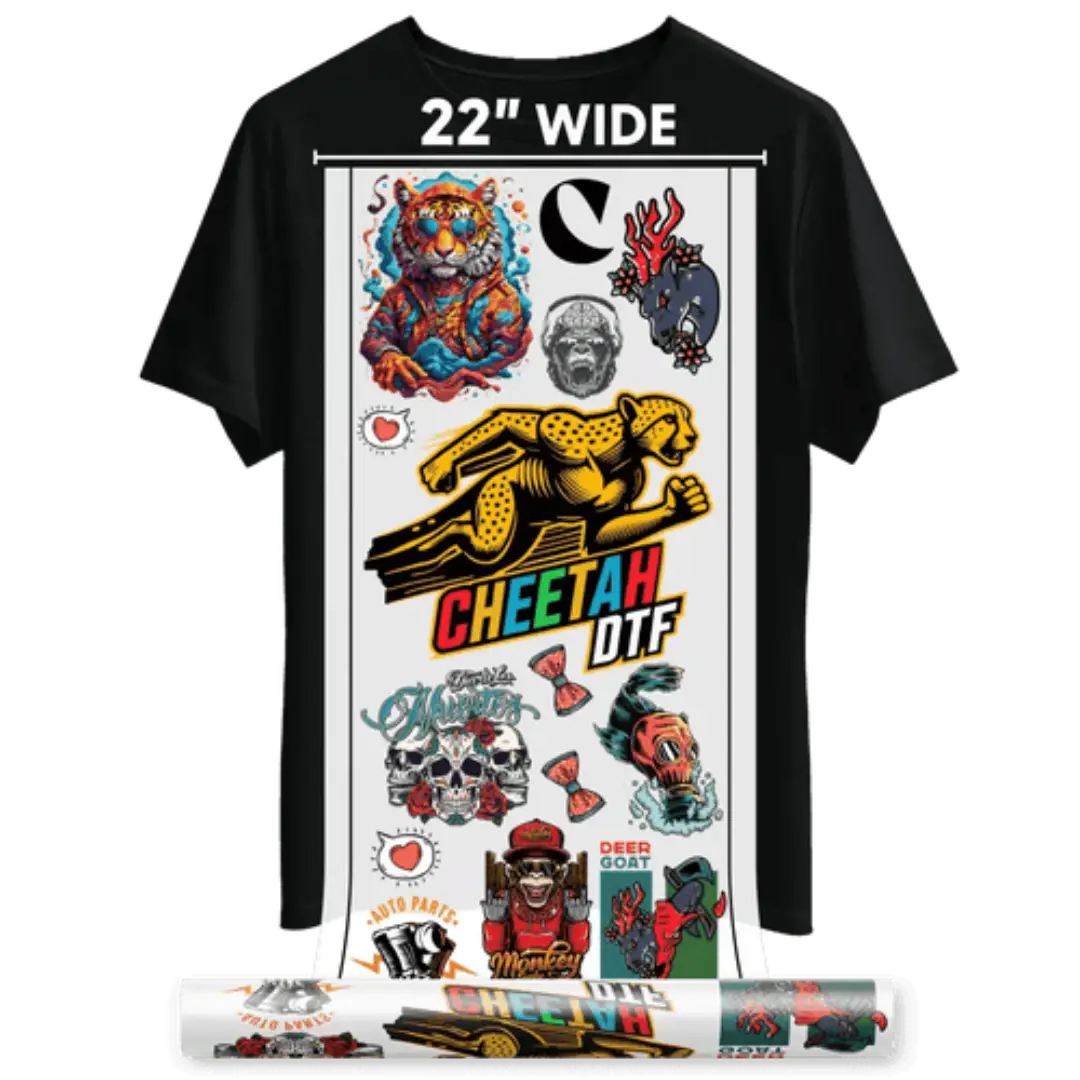
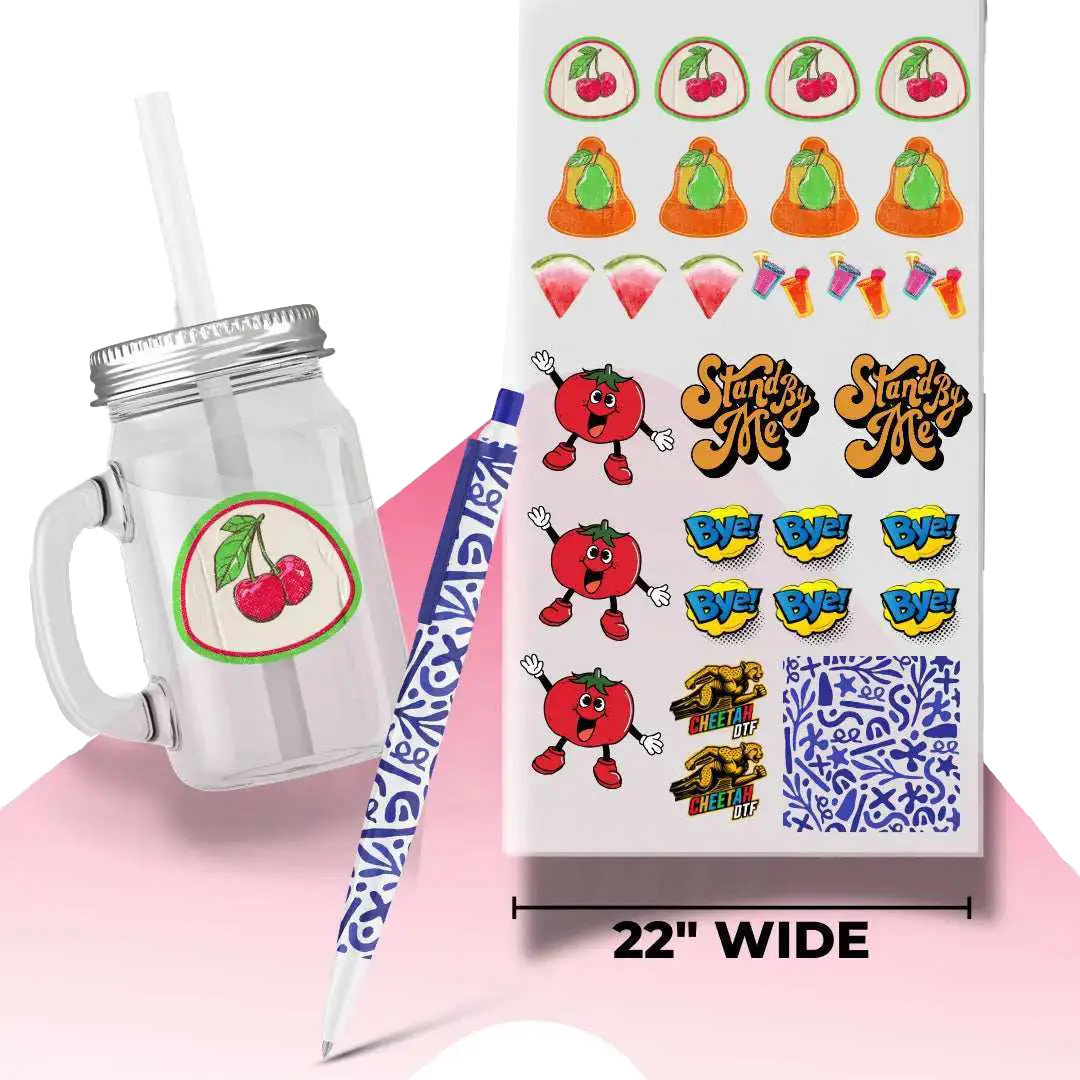
Cheetah DTF UV stickers are extensively employed in mass production due to their high adhesion capabilities, bright color rendering, and uniform application on rigid materials. They offer quick manufacturing processes, thus ideal for use on drinkware and promotional items. Manufacturers appreciate them for their scalability and durability. Manufacturers aiming to improve product quality and market positioning should evaluate which system best supports their long-term production strategy.
Explore Cheetah DTF to find out UV printing solutions for your business.
FAQs
What is 3D UV DTF vs UV DTF?
The fundamental difference is that one technique gives a smooth look and the other gives a three-dimensional look. The standard UV process will give you a flat surface, whereas the dimensional UV process will give you a raised surface.
Which would be better for mass production?
It all depends on production objectives. For mass production, standard systems are typically selected for their economy. Dimensional systems, on the other hand, are usually chosen for premium-quality products. In industrial mass production, most companies apply both according to the product line and its price strategy at retail outlets.
Are raised surface decorations durable?
They are mostly durable because of their structural layers which make them resistant to scratching, manipulation, and external factors. But again, durability is affected by the quality of materials, precision of application, and usage situations. Efficient production methods contribute much to durability in both systems.
Are both processes compatible with drinking ware items?
Yes, both are applied on drinking ware including tumblers, bottles, mugs, and other items. Performance also varies from one item to another depending on its surface characteristics and exposure.
Will TPU UV DTF printing be cheaper?
A standard system will prove to be more economical because of lower demands for materials and processes. It is usually employed in cost-saving productions. A dimensional system is relatively expensive but provides a superior value proposition.
Can I use both 3D UV DTF and traditional UV DTF in production?
Yes, there are many companies that implement both technologies in the same production facility. The reason behind this is that it helps companies cater to various market niches. Traditional UV DTF technology is applied in creating economical products, whereas 3D UV DTF technology is utilized to create expensive, luxury products.
How does each of the technologies behave when exposed to heat?
The performance level depends on the type of material and workmanship standards. A standard technology degrades quickly when exposed to constant heat, whereas a dimensional technology withstands high temperatures better.
Which of these systems would have better results for branding?
In terms of branding, dimensional systems tend to perform much better because of their three-dimensional effect that makes them easier to notice and recognize on the retail shelf.
Does 3D UV DTF stickers or stand UV require special training?
Both of them will need basic training to be performed well; however, in case of dimensional systems, there could be some particularities of using them. If you are looking to do quick packaging or labeling, you can buy Cheetah UV stickers for quick installation.
What should manufacturers pay attention to before making their decision?
In addition to price and quality, manufacturers should think about the amount of products produced, the target market, and future development of the company. Additionally, you need to choose a reliable seller that delivers on time.