

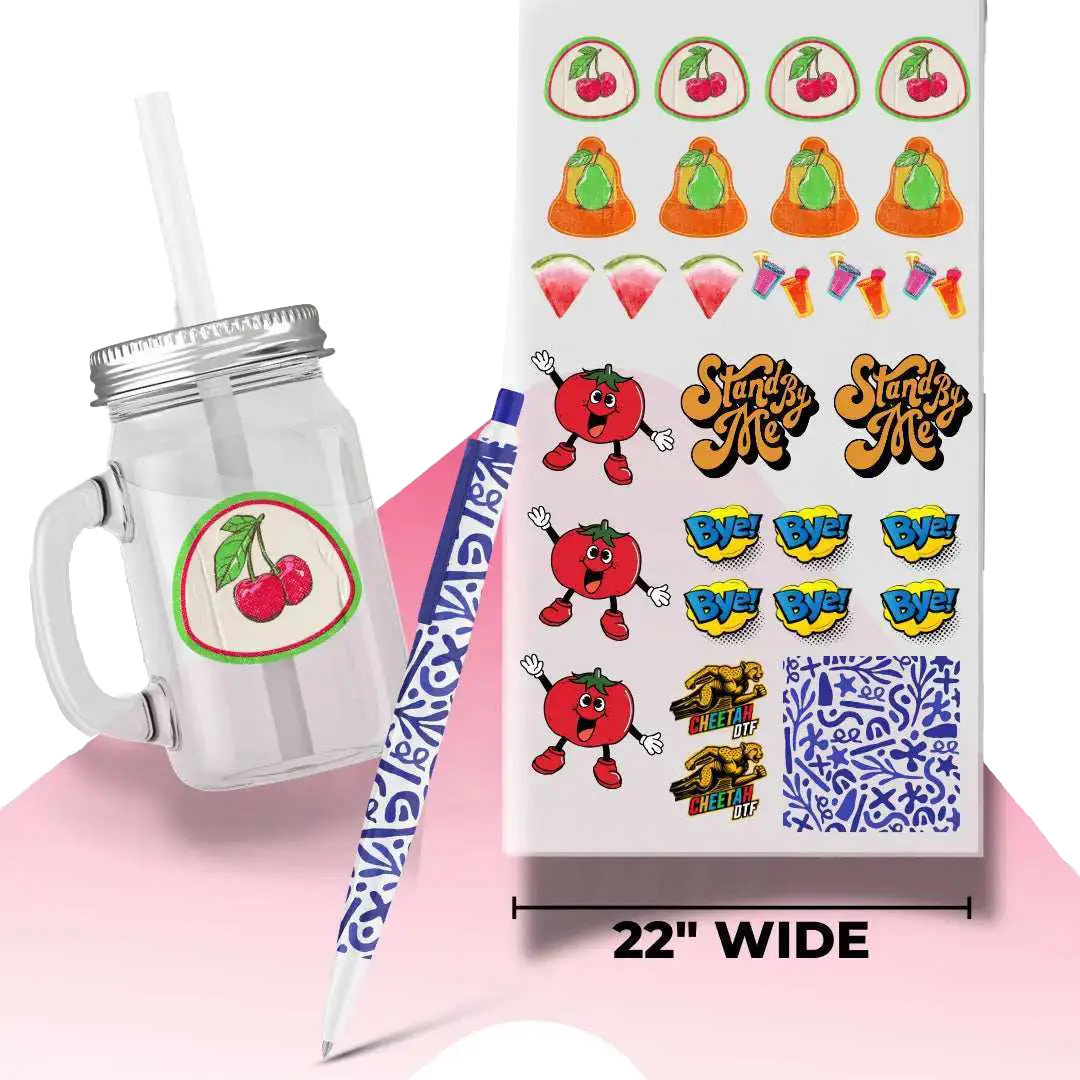


Transparent vs. Solid Acrylic: How UV DTF White Ink Coverage Changes Everything
Ever applied the same UV DTF decal to a clear acrylic keychain and a solid white acrylic sign and wondered why one looks washed out and the other pops? That is not your printer. It is your white ink.
White ink is everything in UV DTF, and how you use it completely changes depending on whether your acrylic is transparent or solid. On clear acrylic, your design is see-through. Without a heavy, solid white flood behind it, your colors disappear and look faded. On solid white or black acrylic, that same heavy white flood will make your colors look thick, bulky, and cause peeling on the edges.
Most people print one way for everything and then wonder why their clear blanks look dull or their solid blanks won't stick. Transparent vs. solid acrylic needs two completely different white ink strategies. Here is how white ink coverage changes everything and how to set it up right so your colors pop on any acrylic.
Why Most People Get UV DTF Transfers on Acrylic Wrong
The common belief is that UV DTF is one setting that fits all. It is not.
Define UV DTF clearly: UV DTF is a transfer system where UV-cured ink is printed onto a film carrier with an adhesive layer, then applied to a hard surface without heat. Unlike fabric DTF, there is no powder and no press. The transfer's look comes entirely from how ink and white are layered on the film.
On solid acrylic, like white or black uv dtf acrylic blanks, the acrylic itself provides the background. You don't need much white. On transparent acrylic, the acrylic provides nothing. Light passes right through. If you only print color, you will see through your design. Your beautiful logo becomes a tinted window.
So the belief that you can use the same file for both types of acrylic is false. We have tested this. A full color design printed with 50% white underbase on clear acrylic loses up to 40% color saturation when viewed in daylight versus the same design with 100% plus 100% double white. That is not a small difference. That is the difference between a premium award and a craft project.
The Light Test That Shows Why White Ink Matters
Hold a clear acrylic piece with uv dtf transfers for acrylic up to a window. If you can see the window frame through your red or black areas, your white coverage is too low. Solid color should block light. If it doesn't, your white underbase fails.
Struggling with faded colors on clear acrylic? Your white coverage is probably wrong.
How White Ink Coverage Works on Solid Acrylic Blanks
Solid acrylic is forgiving, and that makes people lazy.
On white uv dtf acrylic blanks, you technically need zero white ink. The white acrylic acts as your white base. You print color directly and it pops. But zero white creates another problem. The adhesive layer on UV DTF film is slightly hazy. Without any white to block it, light colors like yellow and light pink can look dirty on white acrylic. We recommend 30% to 50% spot white just behind light colors, not full coverage. It keeps the print crisp without adding thickness.
On black or colored solid acrylic, like black awards or colored keychain blanks, you need the opposite. You need 100% white underbase everywhere color exists, or your colors will shift. Yellow on black without white becomes olive green. Red becomes dark brown. We see this error constantly with acrylic uv dtf transfers ordered for black blanks. The file was made for white, printed on black, and the customer blames the printer.
And thickness matters here too. A standard UV DTF layer is about 35 to 45 microns thick. Adding 100% white adds another 20 microns. On solid acrylic blanks that are laser cut with tight tolerances, that extra thickness can cause edge lifting if you wrap the transfer around a beveled edge.
When to Use Spot White on Solid White at Cheetah DTF
At Cheetah DTF, we use spot white logic for solid white. Our RIP reads your file and only applies white behind colors lighter than 50% brightness. That cuts ink usage by about 60% compared to full white flood, keeps the transfer thinner, and still gives you clean yellows and pastels. It is cheaper and it applies smoother.
Why Transparent Acrylic Demands Double White for Real Opacity
This is where most shops lose money.
Transparent acrylic, whether it is a clear award, a clear signage panel, or a uv dtf acrylic keychain, transmits 92% of light according to standard acrylic spec sheets. That means any color you print without enough white will be washed out by the light coming through from behind.
Single white at 100% is not enough for true opacity on clear. Single white gives you about 70 to 75% opacity. You will still see shadows and background through it. For retail-ready products, you need double white, which is 100% white plus a second 100% white layer on top. That hits 95% plus opacity and makes colors look like they were screen printed.
The cost difference is real. Double white uses roughly 2.2 times more white ink than single white. Ink cost per square foot goes from about $0.18 to $0.38. But the perceived value of the final acrylic piece goes up 3 to 4 times because it looks solid, not like a sticker.
And we have to talk about viewing directions. On clear acrylic, you have first surface and second surface application. First surface means you apply uv dtf acrylic blanks transfers on the front. The second surface means you apply on the back and view through the acrylic, which gives you a glossy, protected look. The second surface absolutely requires double white, or your colors will look dull through the 3mm thick acrylic.
How to Put UV DTF on Acrylic So Colors Pop on Clear
If you want to know how to put uv dtf on acrylic and have it look factory-made, use this rule. For clarity, always order double white. For the second surface, order mirrored print plus double white. The mirror flips the art so it reads correctly through the acrylic, and the double white sits on top as the final backing that reflects light back through the color.
See-through reds and faded blacks on clear acrylic? Switch to double white.
How to Apply UV DTF Transfers to Acrylic Without Trapping Air
White coverage changes how you apply, not just how it looks.
A transfer with double white is thicker and stiffer than one with spot white. It does not conform as easily. If you try to apply a large double white transfer to acrylic using just your fingers, you will trap air. Those air pockets show as silver bubbles, especially on transparent acrylic.
The proper method for how to apply uv dtf transfers to acrylic is temperature and pressure controlled. Acrylic should be at room temperature, 68 to 75 degrees. Cold acrylic from a garage or warehouse in winter creates condensation and static. Static attracts dust, dust creates bubbles. Wipe the acrylic with 90% IPA, not 70%, because 70% leaves moisture. Then use a felt squeegee with medium pressure from center out, not from edge to edge.
For large panels over 12x12 inches, we recommend a two-step peel. Peel the carrier at a low angle, about 30 degrees, slowly. If you peel fast at 90 degrees, the thicker double white layer can lift from the acrylic at the corners because the adhesive bond has not fully set.
The Surface Prep Step Most Shops Skip on Acrylic Blanks
We clean every uv dtf acrylic blanks piece with an anti-static brush before application in our own sample room. It cuts dust-related bubbles by over 80% in our testing. You can do the same with a $12 anti-static brush from any electronics supplier. It is the cheapest quality upgrade you can make.
The Durability Difference White Ink Makes on Acrylic Keychains and Signage
White ink is not just about looks. It is about longevity.
On a uv dtf acrylic keychain that lives in a pocket, keys, coins, and hand oils abrade the surface. A transfer with low white coverage is thinner and its color layer is closer to the surface. It scratches faster. A double white transfer has the color sandwiched between adhesive and two white layers, so it is better protected. In our scratch tests with a standard 500g weight, double white transfers survived 120 rub cycles before showing wear, while single white showed wear at 65 cycles.
For outdoor acrylic signage, UV exposure is the killer. Acrylic itself blocks some UV, but color inks fade without a solid white reflector behind them. White reflects UV back, reducing fade. Independent ink suppliers show that double white backed prints retain 92% color after 500 hours of QUV accelerated weathering, versus 78% for single white.
So if you are selling custom uv dtf transfers for acrylic for outdoor use or high-touch items, double white is not an upsell. It is a warranty.
How Cheetah DTF Builds Transfers for High-Wear Acrylic Products
For keychains, awards, and signage, we add a clear varnish layer over the white on our custom uv dtf transfers for acrylic. Varnish adds about 8 microns and gives you extra scratch resistance without changing color. It is why our transfers on acrylic blanks feel smoother and last longer in customer hands.
Conclusion
White ink coverage is not a technical footnote. It is the entire strategy for UV DTF transfers on acrylic.
We have learned that treating clear and solid acrylic the same is the fastest way to make a premium product look cheap. Solid white needs spot white. Solid black needs 100% white. Clear acrylic needs double white, and second surface clear needs mirrored double white. Those are not preferences. They are physics. Light either passes through, gets absorbed, or gets reflected. White is what controls it.
When you match your white coverage to your acrylic type, your colors stay true, your application gets cleaner, and your products last longer in the real world. That is how you turn a simple acrylic blank into something people will pay more for.
And that is the point of using acrylic in the first place. Cheetah DTF builds every acrylic order with that logic, so you don't have to guess.
Ready to stop guessing white coverage and start getting solid colors on clear acrylic?
Why Order UV DTF Transfers on Acrylic From Cheetah DTF?
✔ Fast turnaround on clear and solid acrylic transfers
✔ Consistent print quality with spot, single, and double white options
✔ Competitive pricing for uv dtf acrylic keychain and signage runs
✔ Responsive customer support for file and application help
Ready to experience the difference?
Request Your Quote for UV DTF Transfers on Acrylic Today
Frequently Asked Questions
What Are UV DTF Transfers on Acrylic Used For?
UV DTF transfers on acrylic are used for keychains, awards, signage, cake toppers, and display stands. The transfer applies without heat and gives a printed look on clear or solid acrylic blanks. They are durable, scratch-resistant, and work on flat surfaces up to 3mm thick.
How Do You Apply UV DTF Transfers to Acrylic Without Bubbles?
To apply UV DTF transfers to acrylic without bubbles, clean the acrylic with 90% IPA and an anti-static brush, keep acrylic at room temperature, and use a felt squeegee from center outward. Peel the carrier slowly at 30 degrees to avoid lifting corners on thicker double white transfers.
Do You Need White Ink for UV DTF Transfers on Acrylic?
Yes, white ink is critical for UV DTF transfers on acrylic. On solid white acrylic you need 30 to 50% spot white for light colors. On black acrylic and clear acrylic you need 100% to 200% double white to block background and make colors opaque and vibrant.
What Is the Difference Between Transparent and Solid Acrylic for UV DTF?
Transparent acrylic transmits 92% light and needs double white for opacity, while solid acrylic provides its own background. Using the same white setting for both causes washed out colors on clear. Transparent needs 100% plus 100% white, solid white only needs spot white.
Can You Put UV DTF on Acrylic Keychains?
Yes, you can put UV DTF on acrylic keychains and it lasts well. Use double white plus varnish for extra scratch resistance. Clean the blank with IPA, apply with firm pressure, and avoid wrapping around beveled edges where thickness can cause lifting after a week.
How to Put UV DTF on Acrylic for Second Surface Viewing?
To put UV DTF on acrylic for second surface viewing, order your transfer mirrored with double white. Apply to the back of clear acrylic so you view through the acrylic. The double white acts as a reflector that bounces light back through color for a glossy factory finish.
Are Custom UV DTF Transfers for Acrylic Waterproof?
Custom UV DTF transfers for acrylic are water resistant and UV resistant once applied, but not fully waterproof at the edges if submerged. For signage and keychains they handle hand washing and rain well. Cheetah DTF adds varnish to improve water and scratch resistance on acrylic products.
What Is the Best Acrylic Thickness for UV DTF Acrylic Blanks?
The best thickness for UV DTF acrylic blanks is 2mm to 3mm for keychains and 3mm to 5mm for signage and awards. Thinner acrylic flexes and can cause cracking at edges, while thicker acrylic gives a premium look and better light reflection for clear prints.
Why Are My Acrylic UV DTF Transfers Faded on Clear Acrylic?
Your acrylic UV DTF transfers look faded on clear acrylic because you used single or no white underbase. Light passes through color without white backing, losing up to 40% saturation. Switch to double white coverage to block light and make reds, blacks, and yellows fully opaque.
Does Cheetah DTF Offer UV DTF Transfers for Acrylic Blanks?
Yes, Cheetah DTF offers UV DTF transfers for acrylic blanks including clear and solid colors, with spot white, single white, and double white options. We also provide mirrored prints for second surface application and varnish for extra durability on keychains and signage.