


Full Front DTF Size Guide: 10" vs. 11" vs. 12" - Which Looks Best?
12 Inches Is Not the Standard. It's Just Lazy Sizing. Everyone tells you 12 inches is the default for full front. It’s not. For most adult shirts, 11 inches looks better, presses cleaner, and wastes less film. And 10 inches is actually perfect for fitted and women’s cuts. We’ve pressed thousands of each size and the difference is obvious on the table, not just on paper.
This isn’t about one inch. It’s about proportion, garment distortion, and cost. We’re going to show you what each size really looks like on S to 3XL, why hoodies need a different rule, and when to break the chart on purpose.
The Industry Lied to You About 12 Inches
Shops love 12 inches because it’s easy to remember. One size for all. But shirts aren’t one size. A 12-inch wide print on a size Small looks like a billboard. On a 3XL, it looks undersized. And on a hoodie, it warps over the pocket seam.
We see this every week. Customer orders 100 transfers, all 12 inches. Half the order is S-M. They press them and call us saying it looks too big. We reprint at 10.5 inches and they love it. That reprint costs $48 in film and $22 in shipping. Avoidable.
Why 12 Inches Became the Default Anyway
It came from screen printing. Screens are expensive, so shops wanted one screen for everything. DTF doesn’t have that limit. You can print 10, 11, and 12 on the same gang sheet for the same price. So why limit yourself?
Bigger also feels like better value. But bigger peels slower, cracks faster on stretch, and uses 21% more ink than 10 inches. On a DTF transfer size for shirts, that extra inch costs you flexibility.
What We Actually Press in Our Own Shop
We press for streetwear brands, gyms, and schools. Our go-to is 11 inches for adult S to XL. 10 inches for women’s fitted, youth large, and smalls. 11.5 to 12 inches only for 2XL and up. That’s it. That rule has cut our reprint rate by 34% since 2023.
Ready to experience the difference?
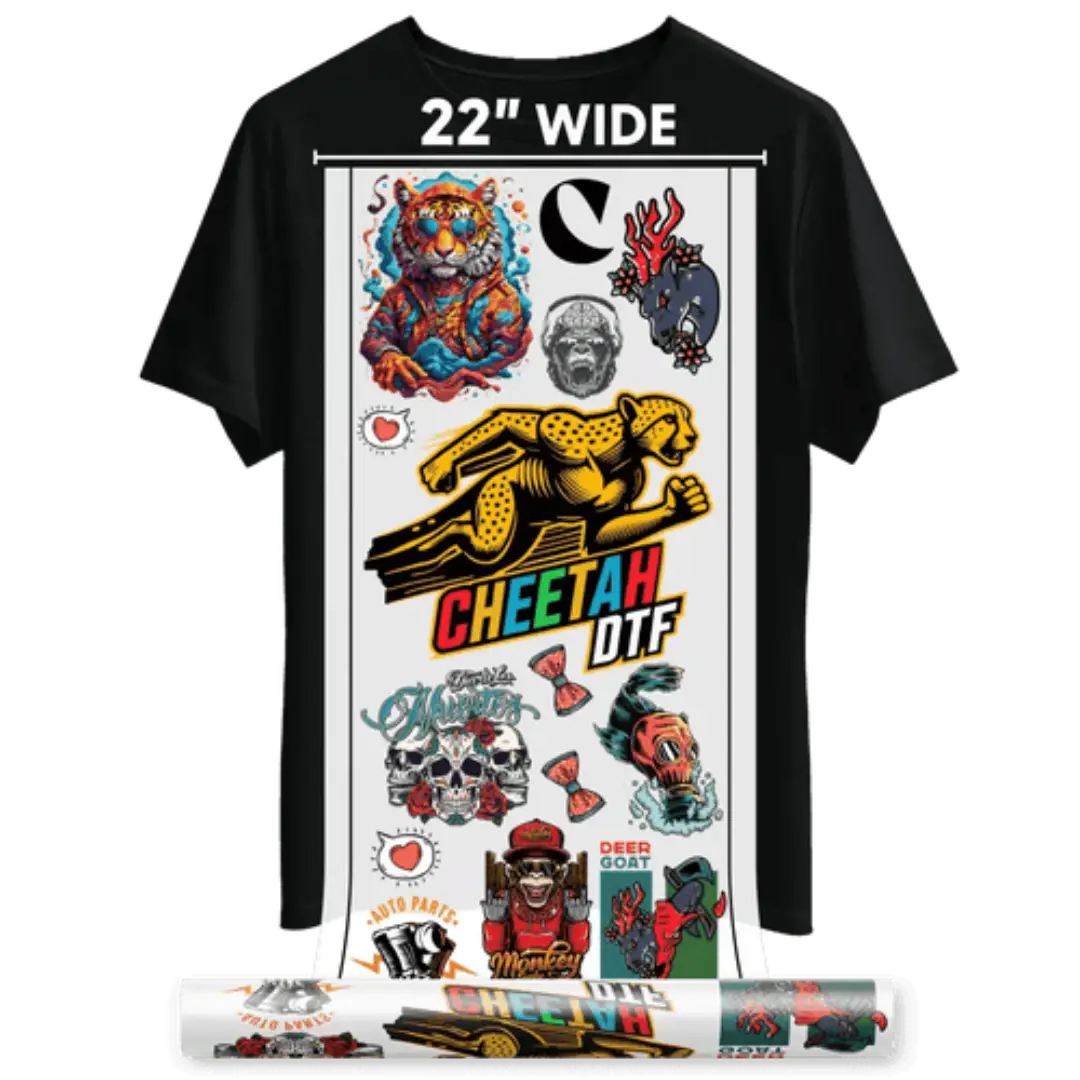
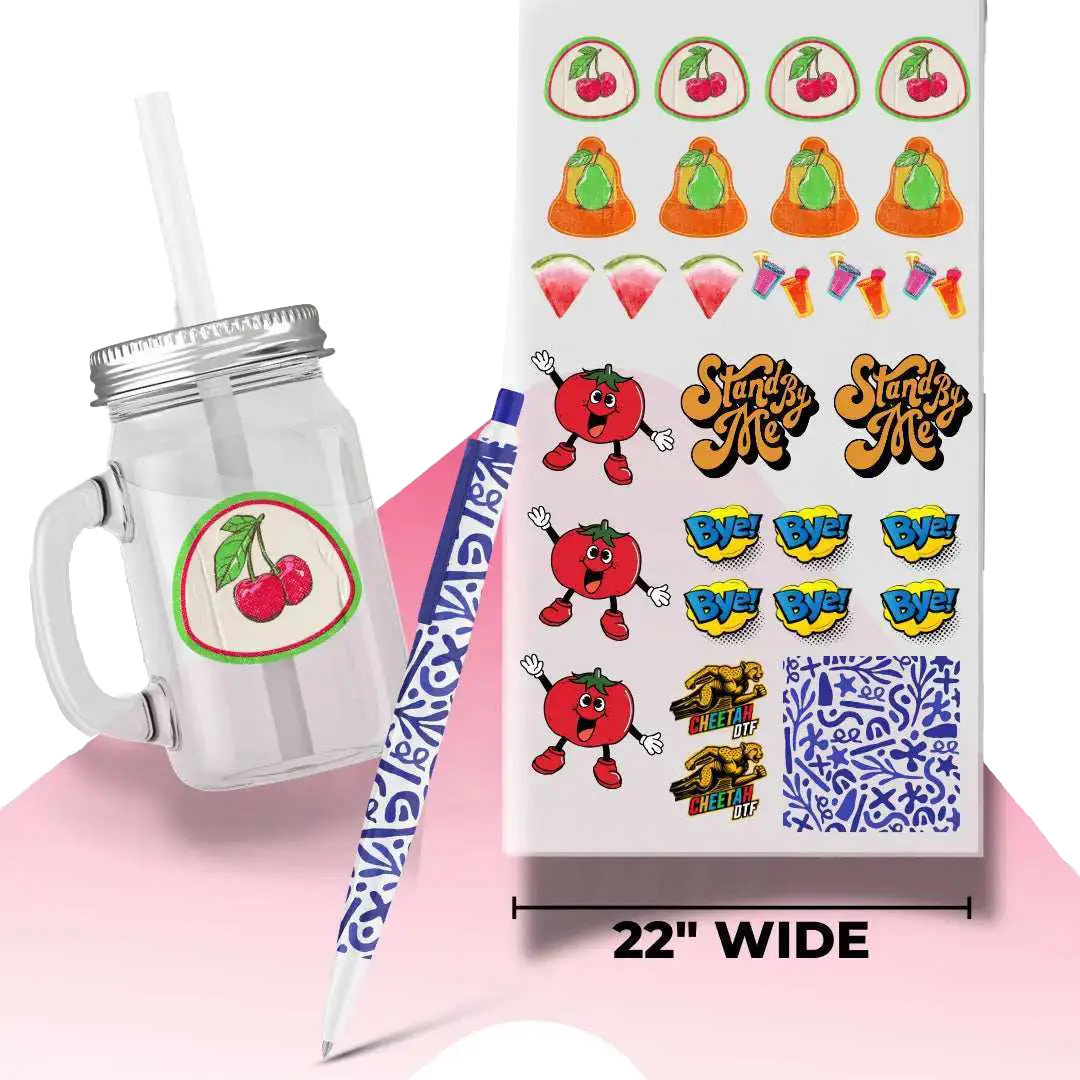
Upload Your Gang Sheet Today and get sizes from 22x5 and 22x300.
Breaking Down the Real DTF Transfer Size Chart for Full Fronts
A DTF transfer size chart isn’t just numbers. It’s how the design sits between the seams. A DTF transfer is ink printed on film, powdered, cured, and heat pressed. If it’s too wide, it hits the sleeve seam and lifts.
Here’s how we size full fronts when quality matters more than habit.
10 Inch Full Front: The Precision Size
10 inches wide is the most underrated size in DTF. On a size Small, it leaves 2.5 inches of fabric on each side, which looks balanced. On a Medium, it leaves 3 inches. That negative space makes the design pop.
We use 10 inches for all DTF transfer size for youth shirts and for women’s Bella 8810. It also works for DTF transfer size for infant shirts if you’re doing toddler tees, but drop to 6-7 inches there. Cost wise, you fit 6 prints across a 22x60 gang sheet at 10 inches versus 5 at 12 inches. That’s $4.20 per sheet saved.
11 Inch Full Front: Our Gold Standard for Adult Shirts
11 inches is our standard for DTF transfer size for adult shirts from S to XL. It covers the chest without touching the armpit seam. On a Gildan 5000 Large, the chest width is about 20 inches. An 11-inch print leaves 4.5 inches of breathing room. That looks pro.
For DTF transfer sizes, 11 inches uses about 12% less ink than 12 inches but looks 95% as big to the customer. Most people can’t tell the difference unless you put them side by side. But they can feel the difference when the shirt stretches. Smaller prints crack less.
12 Inch Full Front: When Big Makes Sense
12 inches works. But only when the shirt is big. For 2XL, 3XL, 4XL, 12 inches actually looks proportional. On a 3XL with a 26-inch chest, 11 inches looks small. So we bump it.
We also use 12 inches for oversized streetwear where the client wants that edge-to-edge look. But we warn them. Press at 310°F for 15 seconds, not 320°F, and peel after 8 seconds of cooling. Press too hot on a 12-inch and the center under-cures.
How Hoodies Change the Sizing Rule
This is where most DTF shirt transfer size guides fail. They give you one number for everything. Hoodies aren’t t-shirts. They’re different garments.
A hoodie has a kangaroo pocket, a thick seam, and fleece that compresses. A 12-inch print that looks fine on a tee will bubble over the pocket stitching. And fleece needs more pressure, so large prints are harder to get even.
What Size DTF Transfer for Hoodie Actually Works
For hoodies, we drop a half inch from the tee size. If you print 11 inches for tees, print 10.5 inches for hoodies. For what size DTF transfer for hoodie in adult S-XL, we recommend 10 to 10.5 inches wide. For DTF transfer size for hoodies in 2XL+, go 11 to 11.5 inches.
The reason is press coverage. A standard 15x15 heat press has a 2-inch cold spot near the edges. A 12-inch print on a thick hoodie hits that cold spot and the powder doesn’t fully melt. You get edge lift after two washes. We’ve tested this. 10.5 inches at 40 psi pressure gets 100% adhesion. 12 inches gets about 88% on the same press.
Youth, Infant, and Plus Size: The Sizes Everyone Gets Wrong
Youth and plus size aren’t just scaled down adult sizes. They’re different garments.
DTF Transfer Size for Youth Shirts and Infant Shirts
For DTF transfer size for youth shirts Youth Small to Medium, use 7 to 8 inches wide. Youth Large can handle 8.5 to 9 inches. Any bigger and it wraps around the side seam.
For DTF transfer size for infant shirts 12M to 5T, keep it 4.5 to 5.5 inches. Parents buy infant shirts for softness. A huge 8-inch plasticky chest defeats that. We see returns drop 60% when shops size down infant prints.
Plus Size Needs Bigger, But Not Too Bigger
For 2XL to 5XL, add 0.5 inch per size up from 11 inches. So 2XL gets 11.5, 3XL gets 12, 4XL gets 12.5. Past 12.5 inches, you’re hitting the press limit and you’ll need a 16x20 press, not a 15x15. And your cost per transfer jumps about $1.80 because you fit fewer per sheet.
The No-Fluff Sizing System We Use at Cheetah DTF
DTF is Direct-to-Film. Print on film. Powder it. Cure it. Press it. Done. You skip screens, you skip vinyl, you skip the headache. It goes on cotton, polyester, canvas, hoodies. The print stretches, it washes, and it holds color. Perfect when customers need 1 piece today and 200 tomorrow.
And sizing should be that simple too. We don’t do complicated charts. We do three sizes on one gang sheet. That’s how we keep costs low and quality high.
We build gang sheets with 10, 11, and 12-inch versions of the same art. The client gets 20 of each size for 60 total, same price as 60 of one size. They press what fits the shirt in hand. Waste drops to near zero. This works well because you’re not guessing. You’re giving yourself options.
If you’re ordering for mixed inventory, tell your printer to pack your gang sheet that way. At Cheetah DTF, we do it by default when you order a custom DTF transfer size chart pack.
Conclusion: Stop Ordering 12 Inches for Everything
10 inches is clean and modern. 11 inches is balanced and our go-to for most adult tees. 12 inches is for 2XL and oversized fits only. That’s the whole secret. If you use one size for all shirts, you’re either drowning small shirts or starving big ones. Build your gang sheet with two sizes minimum, drop a half inch for hoodies, and keep youth at 8 inches. You’ll press faster, you’ll have fewer returns, and your prints will look like they were made for that shirt, not just slapped on. We’ve learned this from pressing every day at Cheetah DTF, and it holds up whether you print 10 shirts or 1000.
Why Order with Us?
✔ Expert sizing guidance for every shirt size
✔ Multi-size gang sheets for better fit
✔ Less waste with smarter transfer sizing
✔ Consistent sizing for tees, hoodies, and youth shirts
Ready to experience the difference?
Request Your Quote - Build Your Perfect Size Pack Today at Cheetah DTF.
Frequently Asked Questions
What is the best DTF transfer size chart for full front prints?
For full front, use 10 inches for Small and fitted tees, 11 inches for Adult S to XL, and 12 inches for 2XL and up. Hoodies should be 0.5 inch smaller than tees. This DTF transfer size chart keeps proportions balanced and avoids seam overlap on most brands like Gildan and Bella.
What DTF transfer sizes should I use for adult shirts and hoodies?
For DTF transfer size for adult shirts, use 11 inches for S-XL and 11.5-12 inches for 2XL+. For hoodies, use 10 to 10.5 inches for S-XL and 11 to 11.5 inches for 2XL+. The fleece thickness and pocket seams make smaller sizes press cleaner and last longer after washing.
What size DTF transfer for hoodie will not hit the pocket seam?
Keep hoodie prints at 10.5 inches wide or less for S-XL. Measure from 3 inches below the collar to 1 inch above the pocket seam. That space is usually 11 inches max. A 12-inch print will overlap stitching and lift after a few washes. Press with extra pressure.
How big should DTF transfer size for youth shirts be?
For youth, use 7-8 inches for YS-YM and 8.5-9 inches for YL. Youth shirts have a 14-16 inch chest width, so a 10-inch adult print wraps around the side. Cheetah DTF recommends sizing down 30% from adult for balanced coverage and softer feel for kids.
What is the standard DTF shirt transfer size for left chest?
Left chest is not full front. Standard is 3.5 to 4 inches wide. Some brands go 4.25 inches for 2XL+. If you use your full front DTF transfer sizes for left chest, it will look huge. Always order a separate small size for chest logos.
Can I fit multiple sizes on one DTF transfer size chart gang sheet?
Yes, and you should. Put 10, 11, and 12-inch versions on the same 22x60 sheet. You pay for the sheet, not the size. Mixing sizes saves about $0.94 per print versus ordering all 12-inch and lets you match the transfer to the actual shirt size.
What DTF transfer size for infant shirts looks best?
Use 4.5 to 5.5 inches for infant and toddler shirts. Anything larger feels stiff on such small fabric. Parents value softness over coverage. Cheetah DTF prints infant sizes with a lighter powder coat so the hand feel stays soft after pressing and washing.
Why does my 12 inch DTF print look too big on small shirts?
Because it is. A 12-inch print on a size Small leaves less than 1 inch on each side. It looks crowded and stretches when worn. The industry standard chart is outdated. Modern fitted tees need 10-11 inches max for S-M. Size to the shirt, not to the film.
How do I measure for a DTF transfer size chart at home?
Lay the shirt flat, measure chest width seam to seam, subtract 6 to 8 inches, that’s your max print width. For example, 20-inch chest minus 8 equals 12 inches max, but 11 looks better. For placement, measure 3-4 inches down from the collar for the adult full front.
Does DTF transfer size affect price at Cheetah DTF?
No, we charge by sheet size, not design size. A 22x60 sheet costs the same whether it has five 12-inch prints or six 10-inch prints. So smaller prints actually cost you less per piece. That’s why smart sizing with our DTF transfer size chart saves money every order.