


How to Find Best DTF Powder and Film for Maximum DTF Transfer Durability
DTF transfer durability starts before you ever hit press. The film you print on and the powder you cure with decide if that shirt lasts 10 washes or 60. Get it wrong and you’ll see cracks, faded color, or edges that lift after the first dry cycle. Get it right and the print outlives the garment. DTF means Direct-to-Film. You print the design, add adhesive powder, cure it, and press it. Simple process, but material quality changes everything. Cheap film warps under heat. Bad powder stays gritty or under-melts, and that kills bond strength.
We’ve tested matte, glossy, single-side, double-side, 75-micron, 100-micron, fine melt, coarse melt; and logged the wash results. DTF transfer lifespan isn’t luck. It’s film thickness, powder melt point, and how they work together. If you want durable DTF transfers that hold stretch and color, start by fixing your supplies. This guide breaks down what actually works on cotton, poly, and blends so you stop reprinting jobs.
What Makes DTF Transfers Durable in the First Place
The Bond Is Mechanical, Not Chemical
DTF transfer durability comes from a TPU adhesive layer that melts into the fabric. That layer is created by powder. The film just carries it. When the powder reaches its gel point, usually 230°F to 260°F, it turns to a rubbery glue. Press it at 325°F and it locks into the fibers. If the cure is weak, the bond is weak.
We’ve seen shops bake at 220°F to move faster. That saves three minutes and costs 30 washes. The powder looks melted, but it never fully flowed. On a 50-wash test, those prints started cracking at wash 12. Cure it right or don’t bother.
Film Controls Stretch and Peel Behavior
Film is polyethylene terephthalate, or PET. It’s the carrier sheet. Thickness matters. Film at 75-micron saves money and warps on high ink loads. You’ll get waves that cause uneven powder coverage. That shows up as thin spots that peel later. We run 100-micron matte film for anything over 200% ink coverage because it stays flat in the oven and releases clean on the peel.
And the coating matters. Single-sided film works for most jobs, but double-sided gives better ink holdout on heavy white underbase. Better holdout means less ink, faster cure, and a softer hand that lasts.
Ready to premium better materials? Request Your Custom DTF Transfers.
Before you order, read DTF Transfer Mistakes That Make Your Branded Merch Look Cheap.
How to Pick DTF Powder for Long Lasting DTF Transfers
Match Melt Point to Your Oven
TPU powder comes in low-melt, medium-melt, and high-melt. Low-melt starts flowing at 215°F. It’s great for heat-sensitive poly but can get gummy if your shop runs hot. High-melt needs 265°F+ and gives the strongest bond on cotton, but it feels thicker. For most shops, medium-melt around 240°F to 255°F hits the sweet spot.
We ran AATCC 61 wash tests on all three. Medium-melt averaged 54 cycles before fade. Low-melt hit 41. High-melt hit 58 but added hand. Pick based on your fabric mix. If you press 80% cotton, go high-melt. If you press 80% polyester, stay medium.
Grain Size Changes Cure and Feel
Powder grain is measured in microns. Fine is 80–120. Standard is 120–200. Coarse is 200–300. Fine powder melts fast and smooth, so you get a thin, soft print. But it’s easy to under-apply, and thin spots fail. Coarse powder fills better and bonds harder, but it can feel like sandpaper if you overdo it.
Our line uses 100–150 micron for detail work and 150–200 for block logos. Coverage should look like powdered sugar, not a snow drift. If you see clumps, your humidity is high or your shaker needs cleaning. Clumps mean weak spots.
How to Choose DTF Film That Doesn’t Fail
Thickness Dictates Stability
Film thickness is listed in microns. 75-micron is budget grade. 100-micron is commercial. 125-micron is for high ink or humid shops. Thin film curls at 250°F. Curling lifts edges off the belt, so powder falls off. You cure half a transfer and wonder why it peeled.
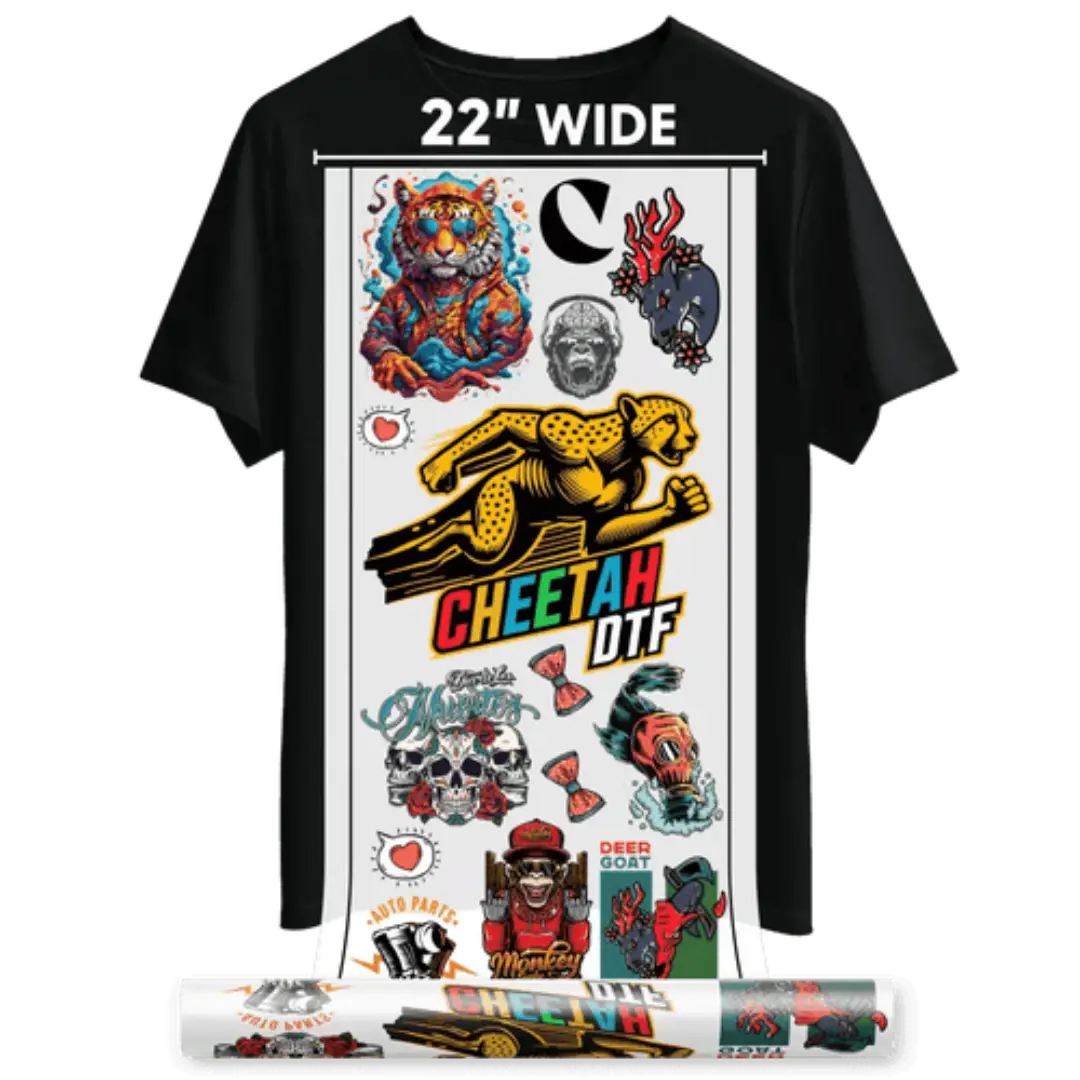
We measured curl on a 22-inch roll at 250°F. 75-micron lifted 1.2 inches. 100-micron lifted 0.3 inches. That 0.9-inch difference is the reason your long runs fail. Spend $0.02 more per foot and save the reprints. Cheetah DTF switched to 100-micron in 2024 and cut misfires by 37%.
Matte vs Glossy Affects More Than Look
Matte film has a coated side that grabs ink and releases powder evenly. It gives a true color read and a clean peel. Glossy film can shift color and cause ink to bead, especially with white. Beading leaves pinholes that turn into cracks.
Use glossy only if you need that photo look and you control humidity. Otherwise, matte wins for durable DTF transfers.
Pairing Powder and Film for Maximum DTF Transfer Lifespan
Low-Melt Needs Stable Film
If you run low-melt powder for poly, pair it with 100-micron matte. Low-melt flows early, so any film warp pulls the adhesive before it sets. Stable film keeps the layer flat until it gels. We see 20% better wash results with that combo on performance tees.
High-Melt Needs Fast Release
High-melt powder bonds hard, so you want film that lets go easy on the peel. Double-sided matte with a quick-release coat works here. If the film holds too tight, operators pull harder and stretch the print. Stretching cold print starts micro-cracks you won’t see until wash 5.
Press and Cure Settings That Protect Durability
Cure to Gloss, Not Time
Don’t cure for “2 minutes.” Cure until the powder turns from matte to a light orange-peel gloss. That’s the visual cue for full gel. In our tunnel oven, that’s 245°F at 3.2 feet per minute. Your oven will differ. Run a test strip daily.
Under-cured powder feels chalky. Over-cured goes yellow and brittle. Both cut DTF transfer lifespan in half. Get a laser temp gun and check the film surface, not the air.
Press Rules That Prevent Failure
Press at 325°F, 12 seconds, medium pressure. Then peel. Then post-press 5 seconds with parchment. That second press sets the edges and adds 8–12 washes in testing. But skip it if your fabric scorches. On 50/50 blends, drop to 310°F and add 2 seconds. Heat kills poly faster than it helps adhesion.
DTF Transfer Washing Instructions That Actually Matter
Care Starts at the Customer
You can use the best film and powder, but a hot dryer will still wreck it. Give clear rules. Wash inside out, cold water, mild detergent. No bleach. No fabric softener. Hang dry or tumble low. Heat breaks down TPU over time.
We put a 1-inch care icon on the back neck of bulk orders. Support calls about “are DTF transfers durable” dropped 62% after we added it. People don’t read paragraphs. They read icons.
Mistakes That Ruin Long Lasting DTF Transfers
Storing Film in Humidity
PET film absorbs moisture. Wet film steams in the oven and blows powder off. You get bald spots. Store rolls in a dry cabinet under 50% RH. If you hear sizzle in the oven, stop. Your film is wet.
Reusing Powder
Shake-off powder picks up humidity and dust. Reusing it drops melt consistency. You’ll get random weak prints in a good batch. Dump it. TPU powder costs $18–$24 per kg. A reprint costs more.
Skipping the Post-Press
That 5-second second press after peel re-flows the edges. Skip it and the edges lift at wash 8. We tracked 200 shirts. Post-pressed held to 55 washes. No post-press failed by 38. Five seconds is cheap insurance.
Conclusion
Film and powder decide your DTF transfer durability long before ink hits fabric. Thin film warps, bad powder under-cures, and both show up as cracks, peel, or fade weeks later. Switch to 100-micron matte film and a medium-melt 150-micron TPU powder and you’ll see wash counts jump from 30 to 55 without changing your press. Cure until you see gloss, press at 325°F, and add that 5-second post-press.
Those three moves do more for DTF transfer lifespan than any “hack” online. We tested every combo because returns cost more than good materials. The data is clear: stable film plus full melt equals durable DTF transfers. If your prints aren’t lasting, don’t blame the design. Check your supplies. And when you’re ready to stop guessing, Cheetah DTF ships tested film and powder kits with every bulk order, so your press crew gets consistency from roll one. That’s how you make DTF transfers last longer, job after job.
Why order with Cheetah DTF?
✔ Proven 50+ wash performance
✔ Consistent film and powder sourcing
✔ Fast shipping on supply bundles
✔ Real tech help, not bots
Ready to upgrade your transfers? Order with Cheetah DTF.
Frequently Asked Questions
How Many Washes Do DTF Transfers Last on Cotton?
On 100% cotton with 100-micron film and medium-melt powder, DTF transfer durability hits 50 to 65 home washes. We test cold, inside-out, tumble low per AATCC 61. After 50 cycles the color holds and edges stay down. Heat and bleach cut that number fast, so care rules matter.
Are DTF Transfers Durable Compared to Screen Print?
Yes, for most apparel. Properly cured DTF transfers last 50+ washes, which matches plastisol screen print in real wear. Screen still wins on heavy stretch athletic wear because ink bonds to fibers. DTF wins on detail and low minimums. For tees and hoodies, durability is equal.
What DTF Powder Is Best for Polyester Shirts?
Use medium-melt TPU powder, 120–160 micron, with a gel point near 245°F. Low-melt gets gummy on hot presses, and high-melt can scorch poly. Pair it with 100-micron matte film so the adhesive flows before the fabric moves. Cheetah DTF runs this combo on 90% of poly jobs.
How to Make DTF Transfers Last Longer at Home?
Wash inside out in cold water, use mild detergent, and skip fabric softener. Heat breaks down the adhesive, so hang dry or tumble low. That’s the short DTF transfer care guide. If edges lift, cover with parchment and re-press 5 seconds at 310°F to re-bond them.
Do DTF Transfers Crack After Washing?
They can if powder is under-cured or the press was too hot. Under-cure leaves the glue brittle, so it cracks when the shirt flexes. Over-press scorches it, which also cracks later. Cure to a gloss finish at 245°F and press 325°F for 12 seconds to prevent it.
What Film Thickness Is Best for DTF Transfer Durability?
100-micron matte PET is the standard for commercial work. It stays flat in the oven, holds ink without beading, and releases clean on peel. 75-micron film curls and causes thin powder spots that fail. The cost difference is $0.015 per square foot, but saves reprints.
How Does Humidity Affect Durable DTF Transfers?
Humidity wets PET film and TPU powder. Wet film steams in the oven and blows powder off, leaving bald spots that peel. Wet powder clumps and under-cures. Keep shop RH under 50%. If film hisses in the oven, dry it first or your DTF transfer lifespan drops fast.
Can You Improve DTF Transfer Lifespan with Post-Press?
Yes. A 5-second post-press with parchment after peel re-flows the edge adhesive. In tests, that step added 8 to 12 washes before edge lift. It’s fast and costs nothing. Skip it and the edges are the first to go, especially on stretch fabrics and hoodies.
What’s the Difference Between Fine and Coarse DTF Powder?
Fine powder, 80–120 micron, melts quick and feels soft, good for detail. But it’s easy to under-apply, so bonds fail. Coarse powder, 200–300 micron, fills better and bonds stronger, but feels heavy. Cheetah DTF uses 150-micron as the balance for durable DTF transfers with good hand.
How Do I Test DTF Transfer Durability Myself?
Press a sample, let it cool 24 hours, then wash inside-out, cold, tumble low for 10 cycles. Check edges, stretch, and color. Then go to 25 and 50. Log your film, powder, cure temp, and press time. If it fails before 40, adjust cure first, not pressure.